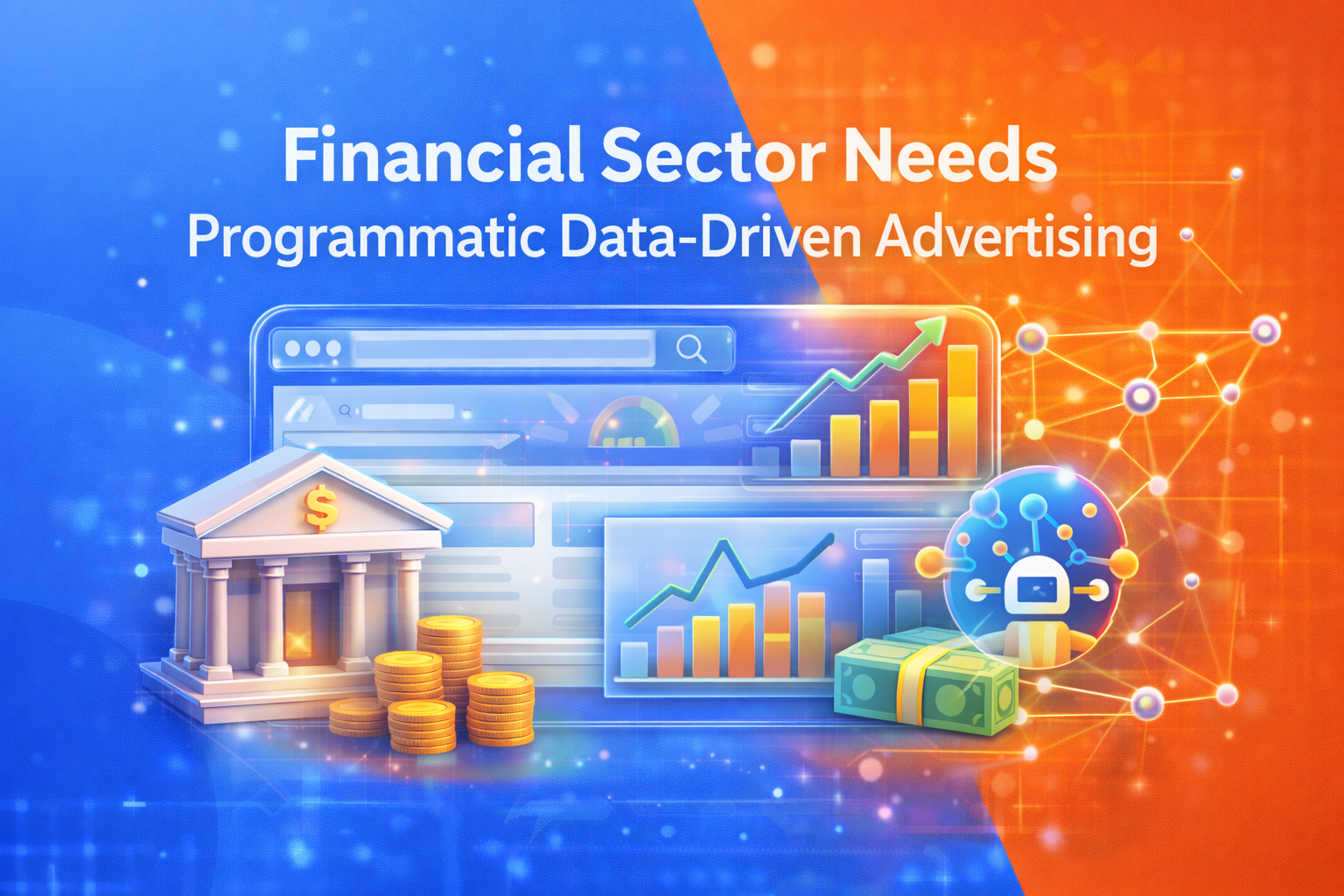
The financial sector has been steadily moving toward digital transformation, driven by evolving consumer behavior and rapid innovation. Today’s financial institutions are expected to understand their customers deeply in order to market personalised financial products and services effectively.
While digital disruption is well underway, much of the financial sector is yet to fully capitalise on the opportunity offered by programmatic, data-driven advertising.
New-age business models in India—such as contactless payments through platforms like Paytm and peer-to-peer financial ecosystems like Cleartax—are reshaping how consumers interact with financial services. Across APAC, digital maturity is accelerating as well. Markets like Singapore have already crossed 90% penetration for contactless payments, signalling a strong shift toward digital-first financial experiences.
⸻
Why Programmatic Marketing Matters for Financial Brands
Financial services marketing is one of the most competitive categories today. Consumers are more informed, comparison-driven, and cautious with their decisions. Traditional advertising methods often fail to reach users at the right moment in their decision journey.
Programmatic marketing enables financial brands to:
• Identify audiences based on search behavior, intent signals, and interests
• Reach anonymous but high-intent users even before they actively search for a specific financial product
• Deliver relevant messaging at scale while maintaining efficiency
Using programmatic, advertisers can build audience models around specific financial intent signals, then expand reach through lookalike and predictive targeting.
⸻
One Size Doesn’t Fit All in Financial Advertising
The financial ecosystem spans a wide range of products:
• Insurance
• Tax advisory services
• Credit cards
• Mortgages and loans
• Investment and trading platforms
Each product requires a unique targeting approach.
For example:
• A mortgage campaign targeting first-time homeowners demands longer consideration windows and educational messaging
• A credit card campaign aimed at university students or freshers requires sharper, lifestyle-oriented targeting
The research time and decision cycle for financial products must be factored into campaign planning. Programmatic allows marketers to adjust frequency, sequencing, and messaging based on where users are in the funnel.
⸻
Audience Strategies in Finance Campaigns
Most financial campaigns rely heavily on:
• Interest and intent-based audiences
• Custom segments built on behavioral data
• Retargeting pools
• Lookalike audiences
However, finance is a heavily regulated industry. Compliance, data privacy, and responsible messaging are non-negotiable. This makes it essential to work with a partner that understands:
• Regulatory frameworks
• Platform policies
• Responsible targeting and messaging
Execution without compliance can lead to wasted spend or reputational risk.
⸻
The Path Ahead for Financial Marketers
Forward-thinking financial brands must start leveraging real-time consumer behavior signals through programmatic ad buying. The ability to react instantly to shifts in user intent, market conditions, and competitive pressure is what separates high-performing campaigns from average ones.
Programmatic advertising offers:
• Real-time optimization
• Smarter audience expansion
• Better control over frequency and sequencing
• Measurable incremental impact
⸻
Case Study Insight: Unlocking Programmatic Potential
A clear example of the impact of programmatic advertising can be seen in the work Litmus Media has delivered for leading digital finance brands.
For instance, while working with crypto platform CoinDCX, programmatic strategies were used to:
• Reach high-intent financial audiences at scale
• Balance performance with compliance in a regulated category
• Optimise campaigns across multiple stages of the user journey
This engagement demonstrated how programmatic marketing can unlock incremental growth, even in highly competitive and regulated financial categories.
⸻
Litmus Media Perspective
At Litmus Media, we believe the future of financial advertising lies in data-driven decision-making combined with responsible execution. Programmatic marketing is not just about automation—it’s about understanding consumer intent, timing, and context.
Financial brands that invest early in programmatic strategies will be better positioned to:
• Build trust with their audiences
• Drive meaningful engagement
• Achieve sustainable growth in an increasingly digital ecosystem
📩 Want to explore how programmatic advertising can work for your financial brand?
Connect with Litmus Media at info@litmusmedia.co for a detailed discussion.